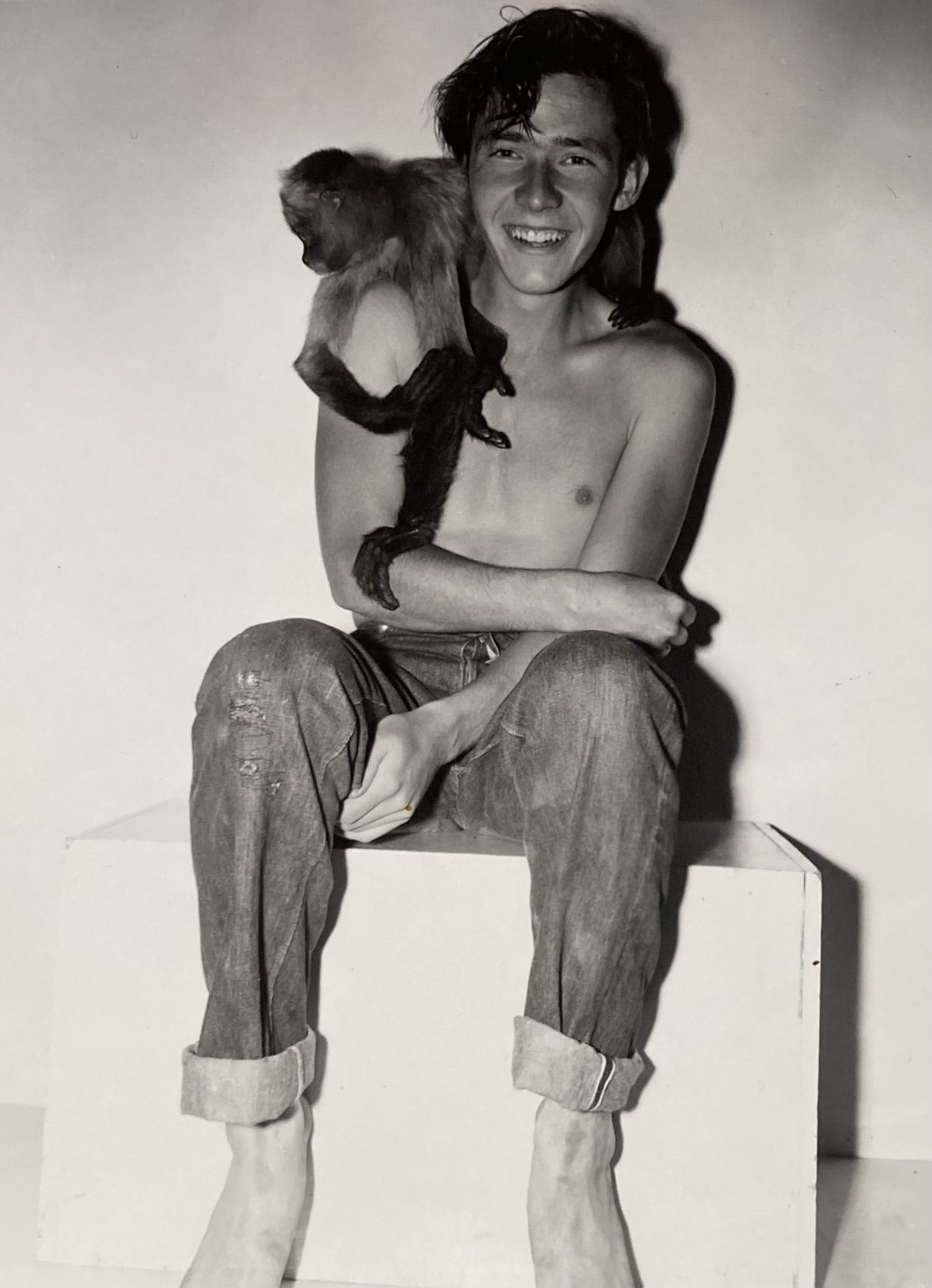
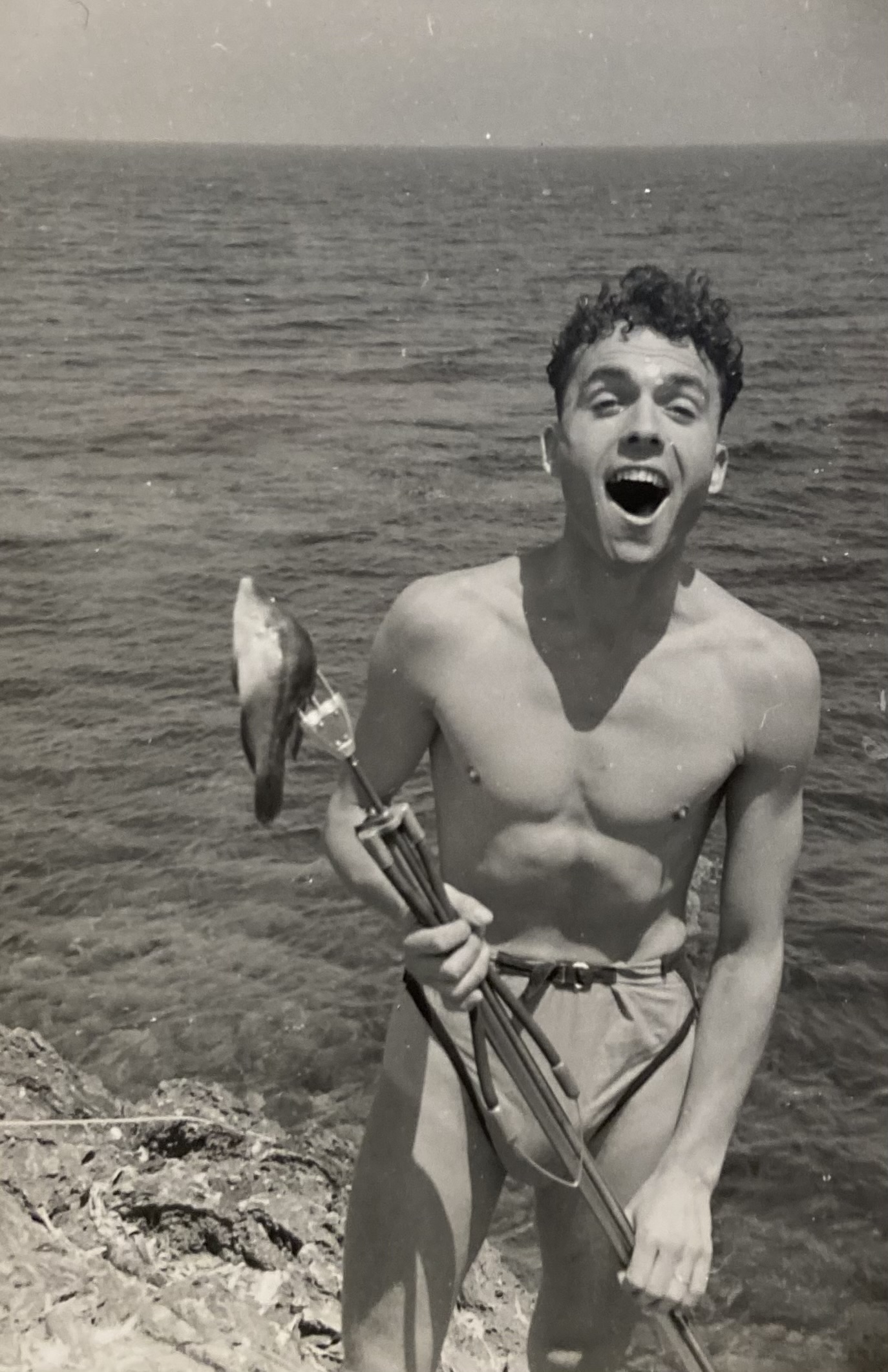
August 1960


Pat Emmick, May 1962

August 1963


This photo includes the happy fellow from yesterday. I have so many questions: Is she a Baltic baroness, and is one man her husband and the other her lover? What happened next? Did the two men go off together, or did the happy fellow return to his lover, the woman in more suitable beach garb?

Louis B. Mayer came up with the idea for the Academy of Motion Picture Arts and Sciences in conversation with Fred Beetson, of the Association of Motion Picture Producers (A.M.P.A.S. founder # 33); actor Conrad Nagel (# 5); and director Fred Niblo (# 11).
A native of the Kiev region of Ukraine, Mayer grew up in New Brunswick. With money from his successful scrap-metal operation, he bought a burlesque house in Boston; from there his rise was swift, and with the mega-merger of Metro and Goldwyn Pictures with his own Louis B. Mayer Productions he created the model Hollywood studio, with “more stars than there are in the heavens.”
His tenure at MGM lasted a quarter century, and if he left in comparative ignominy – forced out by Nicholas M. Schenck, also in this photo – Mayer had overseen an extraordinary run of films and shaped the careers of hundreds of film stars. In 1951 he won an honorary Academy Award for “distinguished service to the motion picture industry.”
I will identify the others in the photo in Harry Rapf’s post.

N.B. The member numbers follow The Internet Movie Database's list order announcing the Academy in January 1927.
18. Louis B. Mayer (Lazar/Ezemiel Mair, 1884?-1957; third from right) and 19. Harry Rapf (1882-1949; next to Buster Keaton) of the Producers Branch, at a house party at William Randolph Hearst’s “El Cuesta Encantada” in San Simeon, California, ca. 1927.

Lupino Lane (Henry William George Lupino, 1892-1959) with his son Lauri Lupino Lane (1921-1986).
Lupino first went on the stage at the age of four, and he was professional from early adolescence. Lane achieved renown in a 1921 pantomime production of ALADDIN, where (per Wikipedia) he “dived through sixty three stage traps in six minutes” at the Hippodrome in London. He had already appeared on Broadway in AFGAR (1920-21) with his wife, Violet Blythe. Three years later he was back, performing in the long-running ZIEGFELD FOLLIES OF 1924 (1924-25) with Will Rogers. His final appearance in New York was as Ko-Ko in the Shuberts’ MIKADO (1925).

N.B. The member numbers follow The Internet Movie Database's list order announcing the Academy in January 1927.
17. Michael C./M. C. Levee (1891-1972), Producers Branch, third president of the Academy, 1931-32, with his wife in New York in 1932.
He was both a longtime studio executive and a top agent; his clients included Mary Pickford, Joan Crawford, and Cecil B. DeMille.

Another image from Deep Well Ranch — this one includes identifications on the reverse, as well as the photographer’s notes on how he took the photo.


Bud Counts is another AMG model who makes his first appearance in his own album.


Chambers and Winship


N.B. The member numbers follow The Internet Movie Database's list order announcing the Academy in January 1927.
16. Jesse Louis Lasky (1880-1958) of the Producers Branch with Otto Kruger (1885-1974) during the production of SPRINGTIME FOR HENRY (1934).
Jesse L. Lasky was perhaps the first Hollywood mogul, and while he did not retain control of the company he had founded, Lasky was one of the giants of early Hollywood. As studio chief at Paramount (as Famous Players-Lasky became), he has 477 credits at IMDb, with 140 credits as a producer. Among the films with which he was associated: THE SQUAW MAN (1914), WHY CHANGE YOUR WIFE? (1920), BLOOD AND SAND (1922), PETER PAN (1924), IT (1927), THE COCOANUTS (1929), and BERKELEY SQUARE (1933).
See an earlier picture of Lasky here.

Leon Errol (Leonce Errol Sims, 1881-1951) filming Elsie Janis’s production of PARAMOUNT ON PARADE (1930). Photo by Don English
Ah, Leon Errol! A native of Sydney, he dropped out of medical school — early enough that he was only 17 when he reached San Francisco in 1898 — and spent the next decade rising through the vaudeville ranks. In 1911, he reached the ZIEGFELD FOLLIES (with his wife Stella Chatelaine). His next show was Ziegfeld’s A WINSOME WIDOW (1912). He was in the 1912 FOLLIES, and again in 1913 (with his wife); he performed with Stella in the 1914 edition, which he also directed (with Flo Ziegfeld).
Errol co-directed “The Blue Follies” in 1915, and for the next few years he directed or staged a run of hits: the 1915 ZIEGFELD MIDNIGHT FROLIC, THE CENTURY GIRL (1916-17), DANCE AND GROW THIN (1917), HITCHY-KOO (1917), and WORDS AND MUSIC (1917-18 and again in 1918). He took a break to appear as Connie, a waiter, and the Duke of Czechogovinia in SALLY (1920-22), which established Marilyn Miller as a star.