Friday, March 8, 2024

AMG IDs

It can sometimes seem like Bob Mizer released his photos in a flood and without a plan. For some reason, perhaps because of the legal peril American physique photographers faced before 1968, he did not make it easy — at least from this vantage point — to navigate his oeuvre, since one (hard to identify) muscular half-naked man may readily be taken for another muscular half-naked man.


But of course there was a plan, and for the audience he sought there was indeed guidance. Even before the (not always satisfactory) Thousand Model Directory was published in 1957, AMG issued materials to guide the collector to Mizer’s preferred outlet: an album showing twelve of the best images in the set and a catalogue (often packed with treasures) from sessions with the model or models. 


It turns out to be difficult to reconstruct this vanished world: the linkages seem broken, and the structures imperfect … to say nothing of the variety of prints AMG made and the consistency with which the studio stamped (or did not stamp or otherwise mark) the reverse of the image with its code.


Difficult, but not impossible. This image, from AMG’s Bulletin 54, is one of many of the lists Mizer offered his customers. To decode it — rather like his later symbol codes — one needs familiarity with the albums and catalogues themselves. It is frustrating to lump “Catalog A-ZB13” together: what does that mean? Only the location of many of the most desirable early Athletic Model Guild images, that’s all.


Let me break it down:


A, Variety

B, Variety

C, Forrester Millard

D, John Miller

E, Variety

F, Gene Eberle

G, Variety

H, Howard Olsen

I, Andy Kozak

J, Forrester Millard

K, Variety

L, Larry Farrell


Continued here.


A photo from 1933 #foundfriday


Thursday, March 7, 2024

More CDVs

The publisher William Worthen Appleton (1845-1924) was married to Anna de Blois Sargent 1881-99. Carte de visite by Critcherson & Storer of Newport, Rhode Island, in 1866.


In 1865, George H. Critcherson and I.J. Storer were photographers located in Black’s Gallery on “Bellevue ave opp[osite] the Naval Academy”; Critcherson lived at 16 Farewell Street, while Storer boarded at the U.S. Hotel in Newport. A year later, the Naval Academy was in the process of moving out of the Atlantic House Hotel, at the corner of Bellevue Avenue and Pelham Street, and back to Annapolis, Maryland. 

More early AMG duals

Forrester Millard and Harold Gillespie


Bob Mizer’s Athletic Model Guild publishing program was initially premised on a curated “album” of twelve images supplemented by a “catalogue” of extras. So far as I know, only Albums M and O are complete as albums — that is, with no extras gathered into a catalogue.


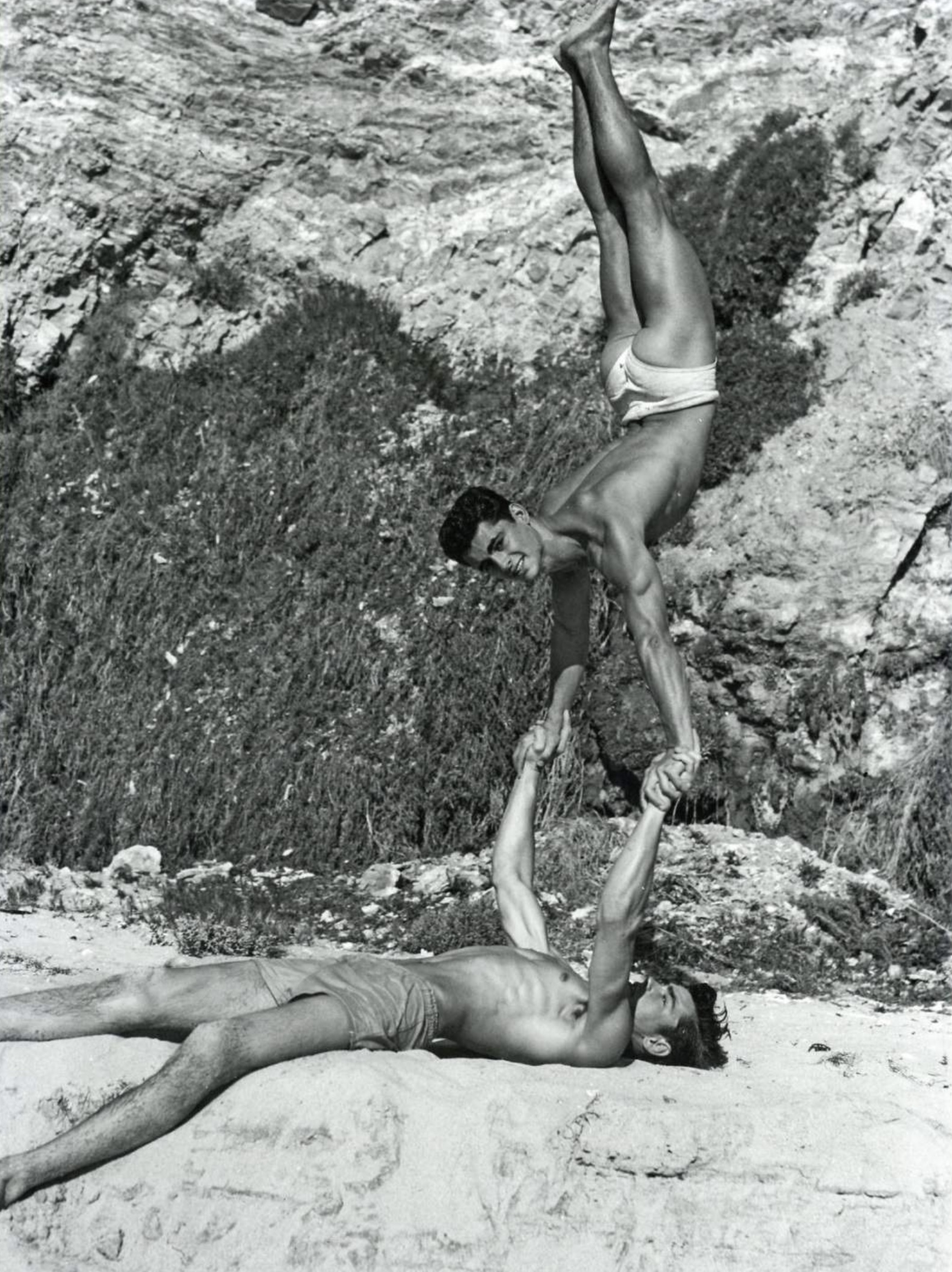
Album M is a variety album with some of the same models found in Albums E and G. Like the G album, these images record outdoor sessions: Forrester Millard and Harold Gillespie in the shallows, Don McLeod and Jerry Feniello grappling in the grass, Angelo Noto and Joe Cuilla in an acrobatic pose and at rest. A final evocative image shows the pair clasping hands across railroad tracks.


Don McLeod and Jerry Feniello


Joe Cuilla and Angelo Noto 


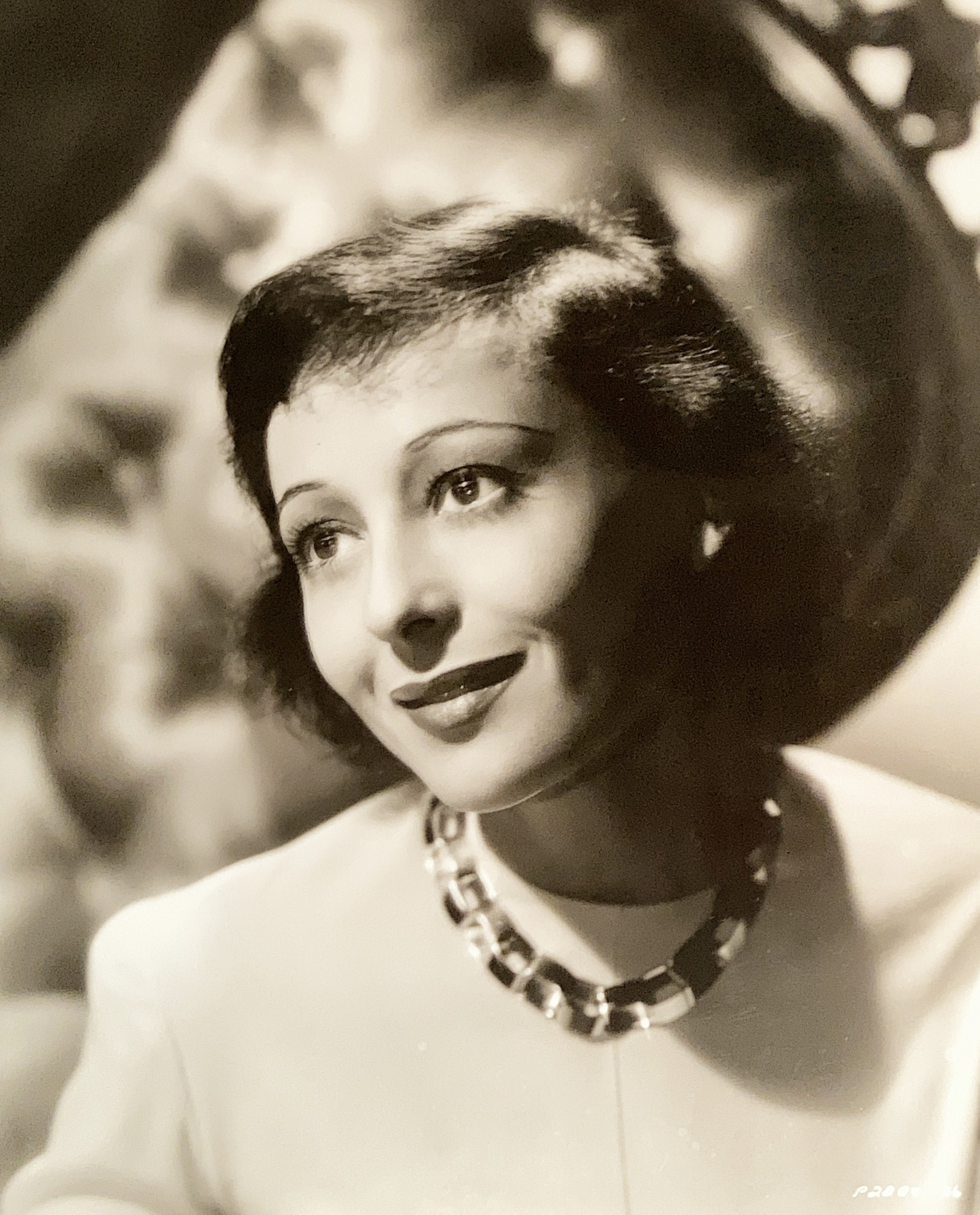
Luise Rainer

Luise Rainer (1910-2014), while filming HOSTAGES (1943). The photo is attributed to A. L. “Whitey” Schafer (1903-1951).


Miss Rainer was the first performer to win consecutive Academy Awards as Best Actress: first for playing Anna Held in THE GREAT ZIEGFELD (1936), and then as O-Lan in a very different film, THE GOOD EARTH (1937).

Wednesday, March 6, 2024

A photo by John S. Barrington?

I do not know who the subject of this photo is, but the print resembles the Mick Sloane photo by Barrington I recently posted. 


ETA: I think I have found a match with another Barrington model.

Academy Founders 9

N.B. The member numbers follow The Internet Movie Database's list order announcing the Academy in January 1927.


9. Henry King (1886-1982) of the Directors Branch. The photo is by Woodbury Studio. 


Harry King was a reliable spotter of talent, picking out Ronald Colman, Gary Cooper, and Tyrone Power (Jr.), among others. As with Cecil B. DeMille, the Academy was chary with honors: King was twice nominated for Oscars, but never won as Best Director. That said, in 1956 the Directors Guild of America honored him for lifetime achievement.

Monday, March 4, 2024

Gary Cooper by Cecil Beaton


Mick Sloane by John S. Barrington

John S. Barrington (sometimes John Paignton, 1920-1991) has a bad reputation with regard to his studio practices, and indeed many of his prints look like they went through a war. This one, though, is beautifully shot and produced — a pleasure to behold in person. 

Ian Maclaren

Ian Maclaren (1875-1952) by White Studios.


A native of Devon, Maclaren made his Broadway début in THE BONNIE BRIER BUSH (1901); a decade later, he supported George Arliss in DISRAELI (1911). (In the aftermath of the TITANIC disaster in April 1912, he organized a benefit performance of HAMLET to mark William Shakespeare’s birthday.) His next Broadway appearance was in THE ZIEGFELD FOLLIES OF 1913.


His later Broadway roles ran the gamut, from a production of Shaw’s ANDROCLES AND THE LION (1915) to THE GREEN RING (1922) and THE LITTLE CLAY CART (1924-25, as Charudatta) with Albert Carroll (“A shampooer who turns monk” in the latter) and Carroll’s frequent co-star Irene Lewisohn. Carroll would appear in the last FOLLIES produced by Florenz Ziegfeld Jr., in 1931.


In films, Maclaren appeared in MONSIEUR BEAUCAIRE (1924), a vehicle for Rudolph Valentino; one of his first sound roles was in JOURNEY’S END (1930). By the end of the 1930s, he had slid into uncredited film roles; his last Broadway appearance was in 1941, in Charles Kennedy’s THE SEVENTH TRUMPET.

Sunday, March 3, 2024

AMG trick duals

Bob Mizer photographed brothers and unrelated pairs (and trios and even larger groups); he also sometimes created trick shots with one model interacting with another/himself. 


Larry Farrell


Ken McNeel 


Lucky Allen


Gene Eberle 


Jack Conant 


Joe Schaller 


“The Golden Bed”

Theodore Kosloff (1882-1956), the choreographer and dancer, is shown here with Lillian Rich picking his pocket in Cecil B. DeMille’s THE GOLDEN BED (1925). Rich's character ensures that Kosloff's Marquis de San Pilar comes to a bad end, allowing her to pursue ...


Rod La Rocque, pictured skipping rope at home by Alexander Paul Kahle. In THE GOLDEN BED, his character is named Admah Holtz -- a singular, and therefore perfect, name for a 1920s hero.

Academy Founders 8c

N.B. The member numbers follow The Internet Movie Database's list order announcing the Academy in January 1927.


8. Cecil B. DeMille (Cecil Blount de Mille, 1881-1959) of the Directors Branch.


Like Mary Pickford or Jesse L. Lasky, DeMille was a model of his kind: in his case, the bravura "Hollywood director." His career lasted long enough that he remade some of his films: THE SQUAW MAN of 1914 was remade twice, in 1918 and 1931; a wide-screen remake of the silent TEN COMMANDMENTS (1923) was the final film in DeMille's (directorial) career, released in 1956. He moved back and forth between romantic comedies and time-spanning (often Biblical) epics: the scenery-chewing GOLDEN BED (1925) was followed by THE VOLGA BOATMAN (1926) and THE KING OF KINGS (1927). 


Perhaps he was not the first to say it, but the phrase "The public is always right" is credited to him. Oddly enough, considering his film pedigree, DeMille was nominated for an Academy Award just twice; only one of his films won Best Picture: THE GREATEST SHOW ON EARTH (1952). In honor of his service to the Academy, and the industry, he won an honorary Oscar in 1950 and the 1953 Irving G. Thalberg Memorial Award. 

Saturday, March 2, 2024

Gary Cooper by Edward Steichen

Early on, I went through a bit of an Instagram phase…

More early AMG duals

Bob Mizer’s AMG album/catalogue G marks the studio’s first full venture outdoors. (John Miller’s D catalogue and Gene Eberle’s album/catalogue F are the earliest tentative steps out of the photographer’s studio.) 


Harold Gillespie appears for the first time in G, but the models are otherwise familiar: Angelo Noto and Joe Cuilla (seen here), Howard Olsen, Bob Yerkes, Gene Eberle, Don McLeod, Jerry Feniello, John Miller, and Forrester Millard had already appeared in earlier albums and catalogues.


Some of the compositions in this al fresco outing indicate that Mizer was just as confident outside as indoors.


John Miller

and Forrester Millard


Jerry Feniello and Don McLeod


Harold Gillespie and Forrester Millard 


Friday, March 1, 2024

Les and Pudgy Stockton by Bruce of Los Angeles


Rod La Rocque and Mildred Harris

THE CRUISE OF THE JASPER B. (1926) was a late silent film directed by Cecil B. DeMille. It starred Rod La Rocque (1898-1969) and Mildred Harris (1901-1944), today most famous as Charlie Chaplin's first wife. The plot of THE CRUISE OF THE JASPER B. revolves around a stolen inheritance and has elements suggesting reincarnation: it also boasts more than one scene where the hero (or the heroine) must appear in fetching undress.


By 1926, La Rocque had already appeared in DeMille's first TEN COMMANDMENTS (with Theodore Roberts and Julia Faye), and in 1927 DeMille served as best man at La Rocque's marriage to Vilma Bánky. The range of careers Cecil B. DeMille launched, or helped, is quite as remarkable as the length and variety of his career. 

Josephine Harriman

The dancer Josephine Harriman by Moffett Studio.


Like Elizabeth Brice and Charles King, Josephine Harriman appeared in Charles Dillingham’s THE SLIM PRINCESS (1911); Elsie Janis was another member of the cast. Her time on Broadway was short, stretching from 1907 (THE GIRL BEHIND THE COUNTER) to 1915 (THE PEASANT GIRL). With Elizabeth Brice, she was a member of the 1913 ZIEGFELD FOLLIES cast.


Moffett photographed her in 1914, when she was a member of the cast of Charles Frohman’s production of THE LAUGHING HUSBAND.